

Fraunhofer IZM: Smarter Way to Spot Heart Trouble
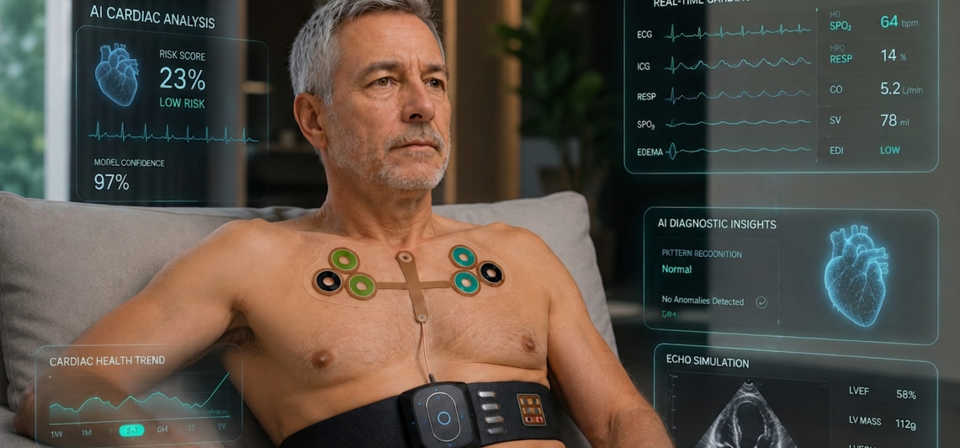
The newest version of the sensor system uses reusable patches and comes with an integrated computing system that paves the way for the collected data to be analyzed by AI. © Basel Adams (AI generated)
Doctors around the world are up against more medical knowledge than any single person can hold. The World Health Organization counts some 55,000 conditions and 13,000 symptoms, and cardiac problems, from high blood pressure to arrhythmias, are among the most common and deadliest.
Smartwatches already flag irregular heartbeats, but they can't replace a cardiologist's full workup, and getting an appointment with a specialist often means a long wait. Researchers at the Fraunhofer Institute for Reliability and Microintegration IZM think artificial intelligence can help close that gap, according to a press release from the institute.
Their wearable sensor system can capture around 240 heart related parameters, sending the data from an edge PC into the cloud, where it's first checked with traditional signal processing before running through specially trained AI models. Neural networks study the shape of readings like ECGs to catch anything unusual, work that studies suggest AI can sometimes do more precisely than experienced doctors.
Large language models add another layer, pulling in a patient's medical history and family background through guideline based questions, then explaining the findings in language suited to either doctors or patients. Several medical LLMs, including Google's MedGemini, work in the background, with an extra AI agent checking everything for consistency.
Fraunhofer IZM sees this as just the start. The same approach, they say, could eventually support other fields like lung health too.