

Berlin Scientists Build a Google for Cell Data
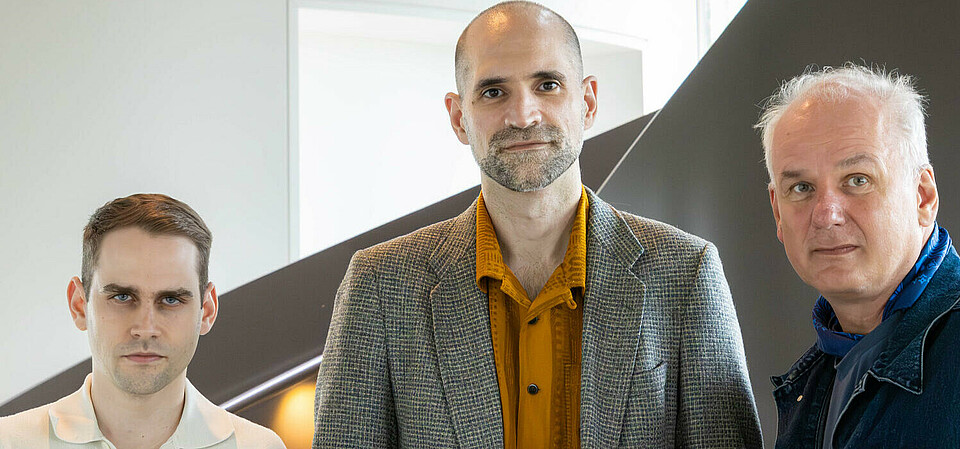
Daniel León-Periñán, Nikos Karaiskos, Nikolaus Rajewsky, creators of Malva - © Felix Petermann, Max Delbrück Center
Scientists at the Max Delbrück Center (MDC) in Berlin have built a search engine for single-cell RNA data that works a bit like Google, but for biology. Called Malva, the tool can scan data from millions of individual cells collected in thousands of experiments around the world, and it does this in seconds.
The team, led by Nikolaus Rajewsky at the Berlin Institute of Medical Systems Biology (MDC-BIMSB), describes the platform in a new paper in Nature. According to the MDC's press release, first author Daniel León-Periñán calls Malva the first platform that can sort through massive single-cell datasets using only sequence information, no reference genome or heavy computing power required.
That matters because single-cell RNA sequencing has produced terabytes of data over the past decade, but actually using it has been a slog. Researchers normally have to download and reprocess huge raw files themselves, a job few labs can handle. Malva skips that step entirely and keeps growing: every time new data appears in scientific literature, it gets added to the platform automatically.
Because Malva searches by nucleotide sequence rather than mapping everything to one reference genome, it can also pick up RNA isoforms, the different variants coded by a single gene, something older tools tend to blur together. It even includes sequence data from bacteria, viruses and fungi, so scientists can study how microbes interact with human cells and contribute to disease.
Rajewsky says the tool could help researchers understand how health turns into disease or how cells respond to specific treatments. Malva is free for scientists to use right now, and the team is already working on a start-up to bring it to market, with a patent pending.