
New Berlin Research Hub Targets Disease at the Cellular Level
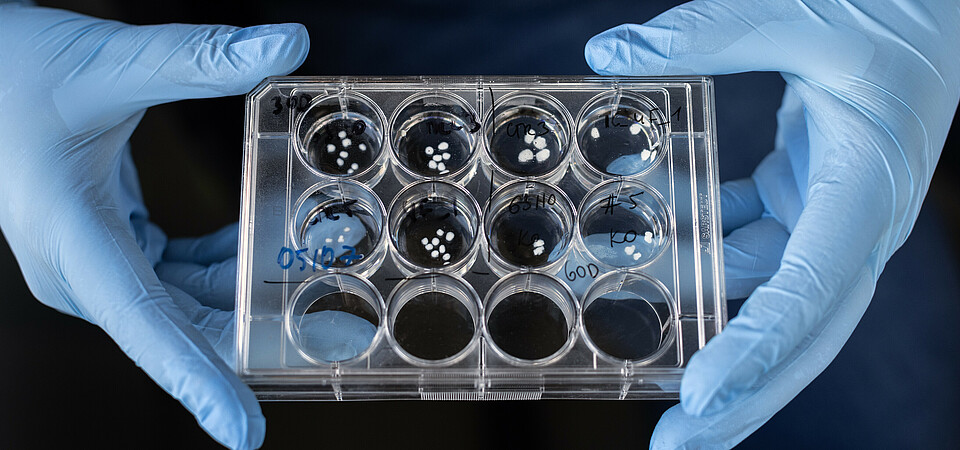
30- and 60-day-old brain organoids in a Petri dish - © Einstein Stiftung Berlin/Pablo Castagnola
Berlin's top research institutions have officially launched the Einstein Center for Early Disease Interception (EC-EDI), a collaborative hub aimed at detecting and treating diseases long before symptoms appear.
The center brings together twelve leading Berlin institutions, including Charité, the Max Delbrück Center, the Berlin Institute of Health (BIH), and the Technical University of Berlin. It was inaugurated at the Berlin Institute for Medical Systems Biology in Mitte, with guests from politics, science, and civil society in attendance.
The core idea is simple but ambitious: most serious diseases develop silently for years. By the time symptoms show up, organ damage has often already set in. EC-EDI researchers want to intervene much earlier, at the stage when only individual cells are affected and the disease can still be steered in a different direction.
To do this, scientists will use cutting-edge technologies including single-cell multi-omics, spatial biology, patient-specific organoids, 3D bioprinting, and AI-based disease modeling. Initial focus areas include inflammatory lung diseases, tuberculosis, Alzheimer's, and multiple sclerosis.
The Einstein Foundation Berlin is funding the center with six million euros over six years, with additional support from the state of Berlin for recruiting young international talent.
Beyond research, EC-EDI is designed to translate discoveries into real-world applications fast, working alongside companies and investors to develop new diagnostic tools and treatments. As project leader Professor Leif Erik Sander put it, the goal is to get the train back on the healthy track, and to do so before the damage becomes irreversible.
For Berlin, the center is also a strategic asset, strengthening the city's profile as a global hub for life sciences and biotech innovation.