


One Region, Two States, Endless Business
Berlin's startups meet Brandenburg's industrial land, all a short train ride from BER. Here's how the region works together.
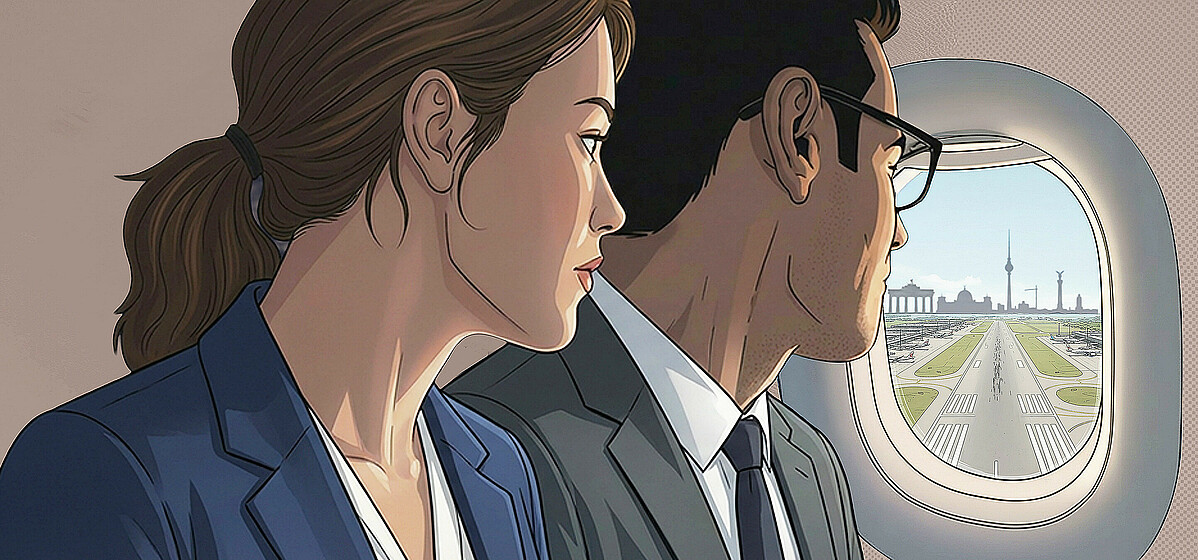
If you fly into the German capital, you technically touch down in Brandenburg. BER, Berlin's international airport, sits just south of the city limits in Brandenburg, the state that completely surrounds Berlin. But don't let the address fool you. Within minutes you can be in the middle of Berlin, and as far as business is concerned, the two states have long stopped thinking in terms of borders.
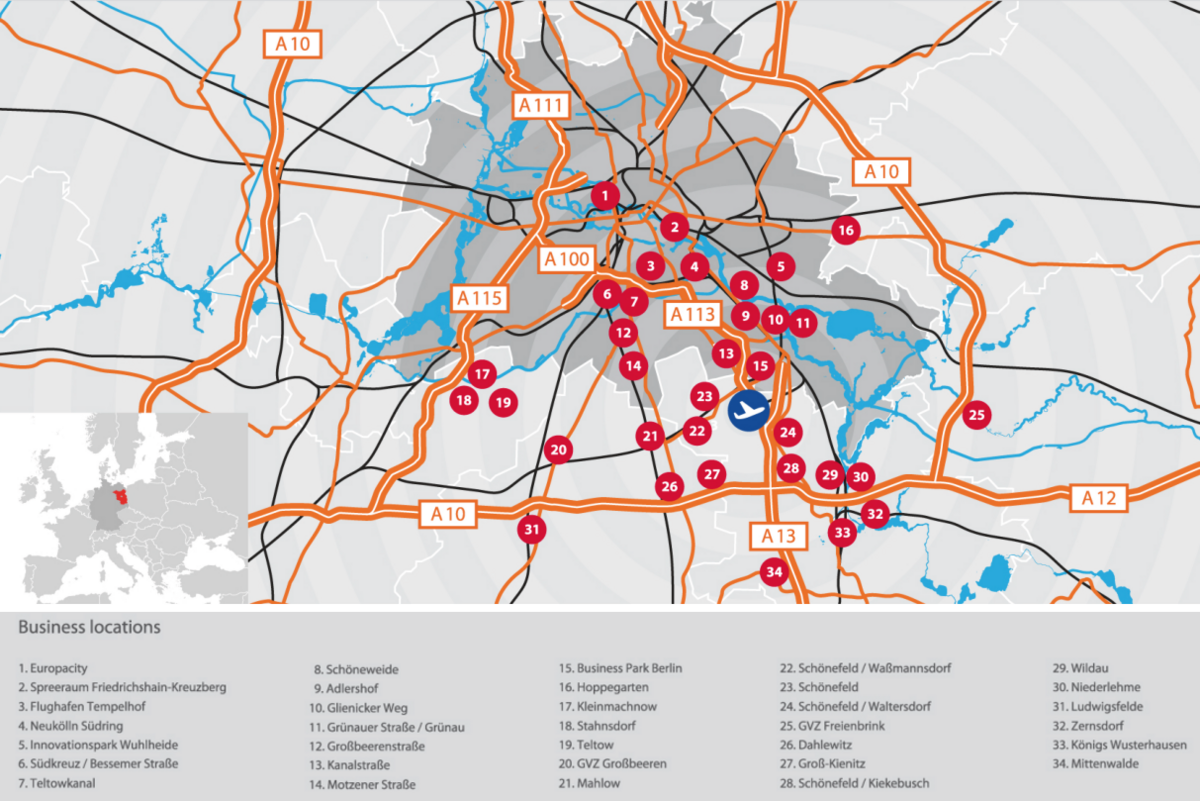
Zoom out 25 kilometers from the airport and you get a rough picture of what the region has to offer: two federal states, one connected economy, and a growing list of reasons why international companies are paying attention. This is the Airport Region Berlin Brandenburg: a highly connected innovation and business hub at the heart of Europe.
---
“Regardless of the sector, Berlin and Brandenburg offer an ideal combination of strategic location, first-class infrastructure, innovative technology centers and support services from the two states' economic development agencies, which help companies grow and expand successfully through a coordinated approach.”
Dr. Stefan Franzke, CEO of Berlin Partner, the economic development agency of Berlin
----
Two states, one economic engine
Berlin and Brandenburg are separate federal states with separate governments, but when it comes to economic development, they work hand in hand. Their economic development agencies coordinate closely, and the strategy behind that cooperation is fairly simple: play to each region's strengths instead of competing over the same ground.
Berlin contributes innovation, research and technology expertise. It's home to Germany's leading startup ecosystem, a dense network of research institutions, and technology hubs that attract talent from around the world. Brandenburg, on the other hand, has something Berlin can't offer in the same way: space. It offers large sites for production, logistics and service operations, the kind of space that is difficult to find in a densely built capital city.
Put those two things next to each other and you get a region where a company can develop a product with Berlin's research and startup networks and then manufacture it at scale on Brandenburg's industrial land, all within a short drive. That combination, short distances plus complementary strengths, is really what the Airport Region concept is about.
Why the airport matters more than you'd think
BER opened in 2020 and sits right at the heart of this region, acting as its gateway to the world. For companies weighing where to set up in Europe, direct flight connections are not a minor detail; they are often a decisive location factor. BER connects the capital region to more than 130 destinations across Europe, Asia, Africa, and North America.
There's a particular advantage for companies with ties to Asian markets: flight times from Berlin to major Asian hubs tend to be shorter than from airports like Paris or London. For businesses building supply chains or maintaining regular contact with Asian partners, that difference adds up.
Getting into the city from the airport is just as straightforward. The Flughafen-Express (FEX) regional train runs every 15 minutes between BER and central Berlin, and the ride from Berlin Central Station to the airport takes only about 20 minutes. No taxi queues, no risk of traffic delays, just a quick train ride, and it costs no more than a regular U-Bahn ticket.
Adlershof: Germany's biggest science and technology park
If you want a snapshot of what Berlin's side of the region looks like in practice, Adlershof is the place to look. It's Germany's largest and most successful science and technology park, and the numbers behind it are hard to ignore.
Spread across 4.6 square kilometers, Adlershof is home to around 1,300 companies and 18 scientific institutions, together employing roughly 29,600 people. Add to that about 6,200 students working and studying on site, many connected to Humboldt University of Berlin, one of the anchor institutions driving the park's research output.
What makes Adlershof stand out isn't just the size, it's the density of expertise. It's consiedered the location with the highest concentration of world market leaders anywhere in Germany, with 90 companies claiming that title for themselves. That's the kind of cluster effect that's genuinely hard to replicate: excellent universities, established tech companies, and rising startups all working in close proximity, feeding ideas and talent back and forth.
---
“International companies like Tesla and others don't see Berlin and Brandenburg as separate places, they see the metropolitan region as a whole. It is important to them that knowledge can be accessed quickly, that the location attracts talent, and that companies can find suitable areas in which to locate.”
Roland Sillmann, CEO of WISTA Management GmbH, the operator of the Adlershof technology park
---
Tesla's Gigafactory: Brandenburg's industrial flagship
On the Brandenburg side of the region, the clearest example of what large-scale industrial investment looks like is the Tesla Gigafactory, which opened in 2022 and ranks among the largest investments ever attracted to the Airport Region.
The Gigafactory Berlin-Brandenburg produces hundreds of thousands of Model Y vehicles along with millions of battery cells every year. What sets it apart from Tesla's other plants is a European manufacturing first: it's the first site on the continent where battery cells are produced in the same factory as the electric vehicles they power. That kind of vertical integration, building the battery and the car under one roof, says a lot about the type of ambitious industrial projects the region is now able to host. In addition to the Gigafactory, Tesla also operates an innovation center in Berlin.
Between Adlershof's research density and Tesla's manufacturing scale, you get a fairly complete picture of the range this region covers, from early-stage science to full industrial production, all within a compact, well-connected area.
A region built for every type of company
What's notable about the Airport Region Berlin Brandenburg is how broad its business landscape actually is. It stretches from Berlin's busy city center through southern Berlin and into the Brandenburg communities surrounding the airport, and companies of all sizes have found a place in it. Global corporations, established mid-sized businesses, and early-stage startups all operate here, across a wide range of industries.
Excellent infrastructure, well-located commercial sites, innovative technology centers, and a motivated workforce all contribute to the region's attractiveness. High-growth and innovative industries in particular tend to thrive here, benefiting from unusually strong cooperation opportunities and dense industry and science networks that are hard to find concentrated in one place elsewhere in Europe.
Free support for companies looking to get started
Setting up in a new country always raises questions, and this is where the close cooperation between Berlin and Brandenburg pays off directly for businesses. The economic development agencies of both federal states offer comprehensive, free support for international companies looking to make the most of what the German capital region has to offer.
Whether that means finding the right site, connecting with local partners, or simply understanding how things work here, the support is there, and all of these services are provided free of charge.
For more on the business opportunities across the wider region, visit the Airport Region Berlin Brandenburg website. And if you're ready to explore how Berlin Partner can support your plans, take a look at the support services on offer.
-----